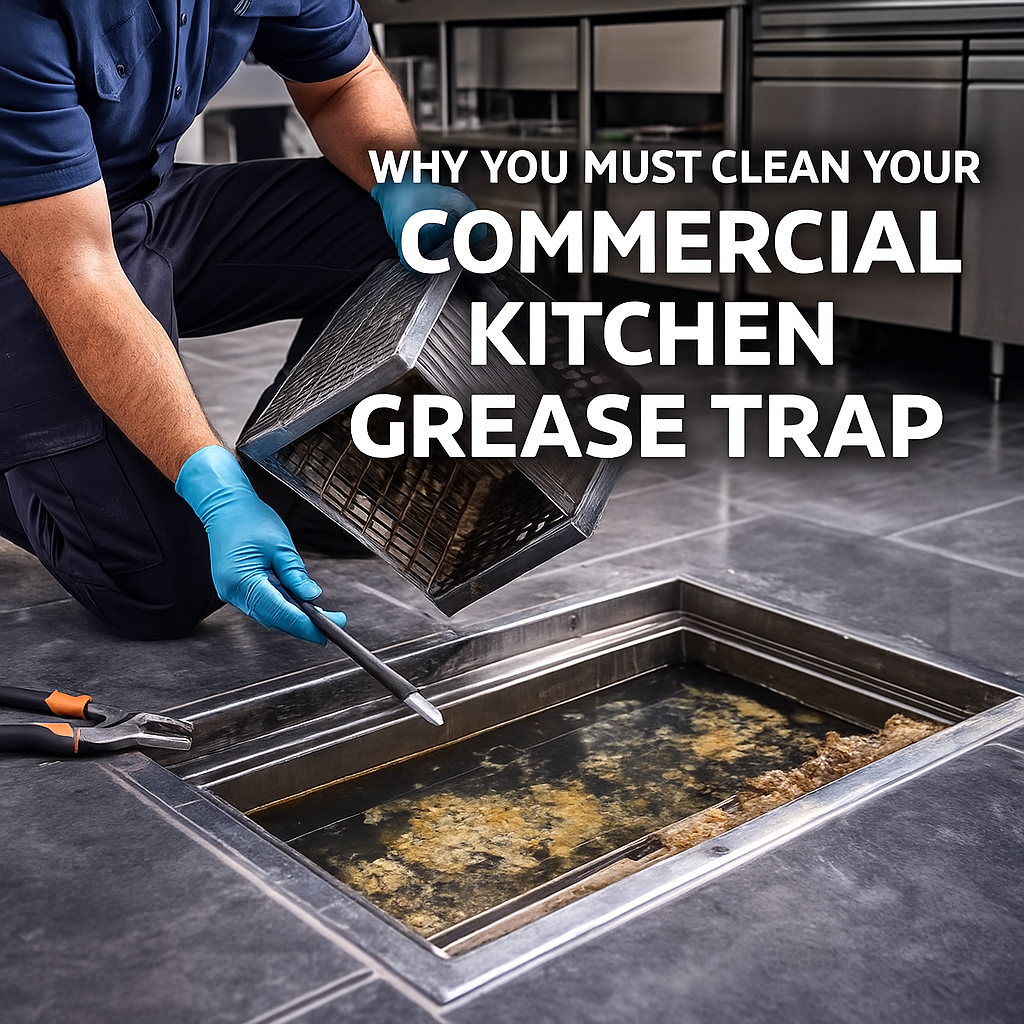

In every commercial kitchen—restaurants, food trucks, hotels, cafeterias, and catering facilities—grease traps play a crucial but often overlooked role. While they operate out of sight, they should never be out of mind. A neglected grease trap can quickly turn into a major health, safety, and financial problem.
Here’s why regular grease trap cleaning is an essential part of maintaining a safe, compliant, and efficient commercial kitchen.
- Prevent Costly Plumbing Backups
Grease traps catch fats, oils, and grease (FOG) before they enter the plumbing system. When traps become full, drains clog, sinks back up, and sewage can overflow. Emergency plumbing becomes unavoidable, leading to shutdowns and thousands in repair costs. - Stay Compliant With Health & Environmental Regulations
Most cities enforce strict grease trap maintenance regulations. Failure to comply can result in fines, health violations, forced closures, or environmental penalties. Municipalities closely monitor grease entering sewer systems. - Maintain a Clean, Odor-Free Kitchen
Overloaded grease traps produce strong odors that spread throughout the kitchen and dining area. Regular cleaning keeps your kitchen fresh and sanitary. - Reduce Fire Hazards
When grease traps overflow, fats and oils may travel into plumbing or other systems, increasing the risk of flare-ups and grease fires. Proper trap maintenance helps prevent this. - Improve Kitchen Efficiency and Workflow
Neglected traps cause slow drainage, sink downtime, and disruptions in prep and dishwashing. Clean traps keep operations running smoothly. - Extend the Life of Your Plumbing System
Grease that escapes beyond the trap solidifies in pipes, causing corrosion, blockages, and costly plumbing repairs. Routine cleaning prevents long-term damage. - Protect Your Reputation
Odors, plumbing issues, and failed inspections damage your business image. Clean grease traps help maintain customer and staff trust.
How Often Should You Clean a Grease Trap?
Most commercial kitchens need cleaning every 1–3 months. High‑volume operations may require monthly or bi‑weekly service.
The Bottom Line
Cleaning your grease trap is essential. It prevents disasters, ensures compliance, reduces odors, protects equipment, improves kitchen efficiency, and saves money long-term. A clean grease trap is the foundation of a clean, profitable kitchen.