
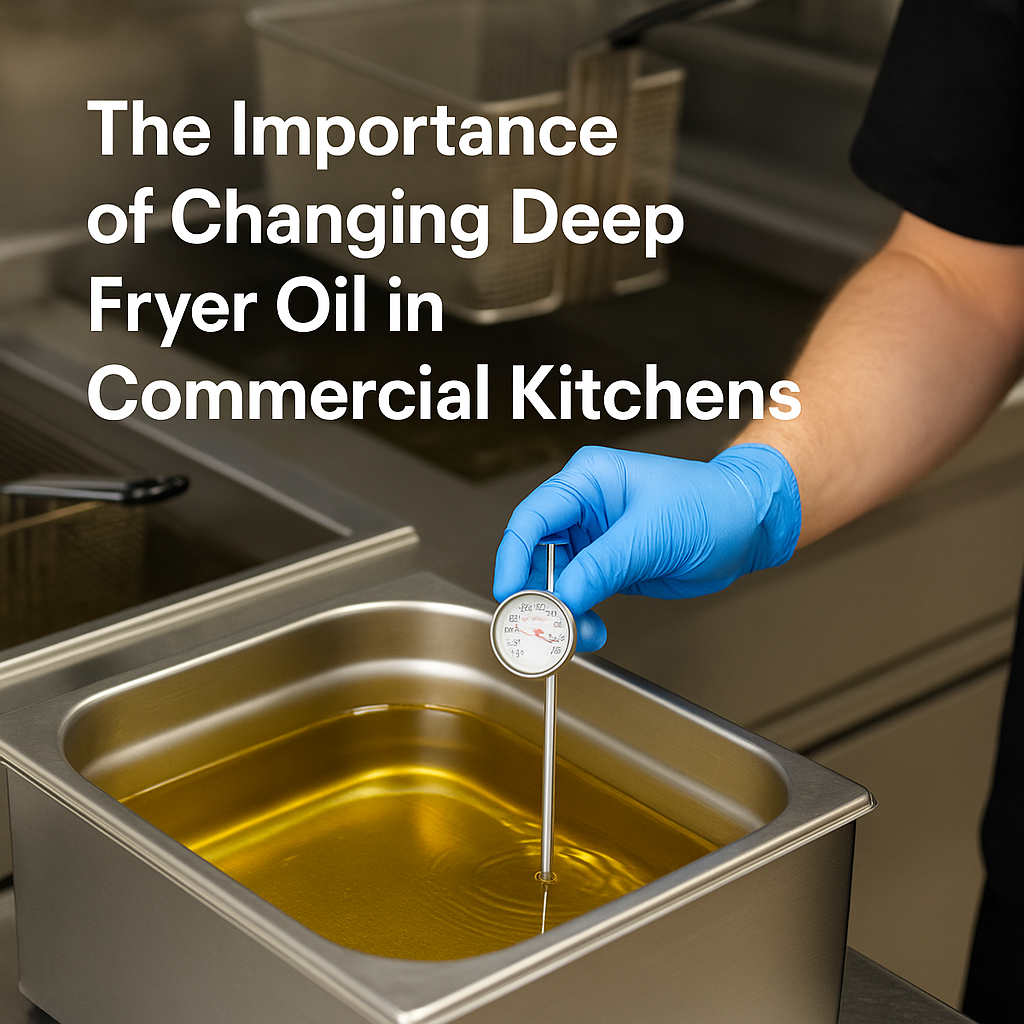

In any commercial kitchen—restaurants, food trucks, hotels, cafeterias, or catering operations—fried foods are often customer favorites. But serving consistently crispy, flavorful fried items depends on one key factor: using clean, fresh cooking oil.
Changing fryer oil regularly is essential for safety, food quality, equipment longevity, and the overall success of your operation. Here’s why proper fryer oil management should be a top priority.
- Better Food Quality and Customer Satisfaction
Old oil breaks down, leading to greasy textures, burnt flavors, dark colors, and unpleasant odors. Fresh oil produces crispier, lighter, more appetizing fried foods that keep customers coming back. - Protecting Your Brand Reputation
Consistency is everything in food service. Poor oil maintenance leads to inconsistent quality, customer complaints, and negative reviews. Clean oil helps maintain trust and repeat business. - Improved Kitchen Safety
Degraded oil has a lower smoke point and can foam, overflow, or ignite more easily. This increases burn risks and fire hazards. Fresh oil reduces these dangers and keeps your kitchen safer. - Longer Fryer Equipment Lifespan
Dirty oil leaves behind carbon residue that coats heating elements and surfaces. This causes equipment to work harder, increasing breakdowns and repair costs. Routine oil changes protect your investment. - Increased Energy Efficiency
Fresh oil heats faster and holds temperature better, reducing energy use and lowering utility costs. Old oil forces equipment to work overtime. - Health & Code Compliance
Burnt particles, contaminants, and oil breakdown products can jeopardize sanitation. Kitchens risk failing inspections or health code checks if oil isn’t properly maintained. - Cost Savings and Better Oil Management
Strategically changing oil—not too early and not too late—reduces waste and improves cost efficiency. Pairing oil changes with proper filtration extends its usable life.
When Should You Change Oil?
- When the oil is dark or cloudy
- If it smells burnt or rancid
- If food becomes greasy instead of crisp
- If excessive smoke appears at normal temps
- When cooking times increase
- If foaming or bubbling irregularly occurs
Most commercial kitchens change oil every 1–4 days, depending on volume and food type.
Final Thoughts
Changing fryer oil is one of the simplest and most important steps in serving great food and running a safe, efficient kitchen. It keeps customers happy, reduces kitchen hazards, extends equipment life, and protects your brand—all while improving your bottom line.